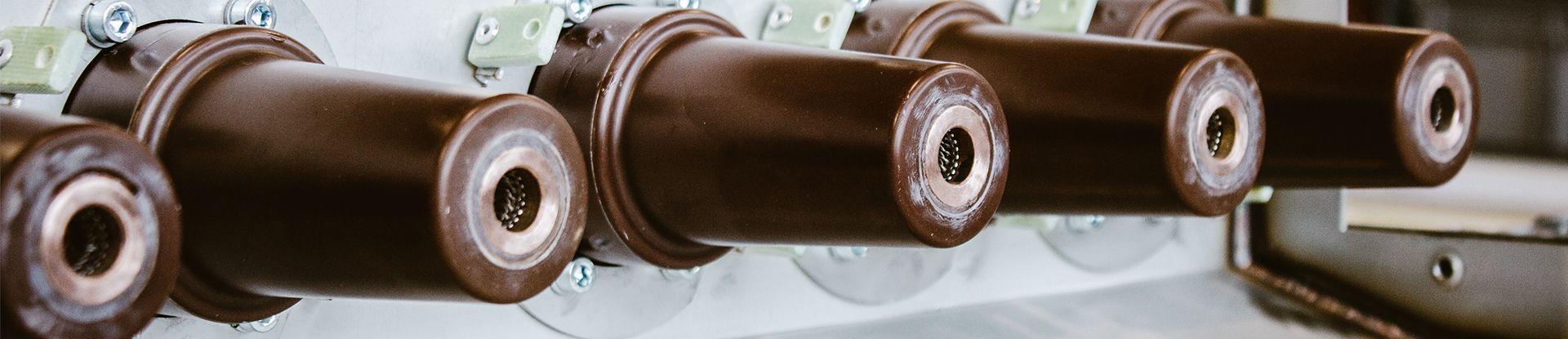
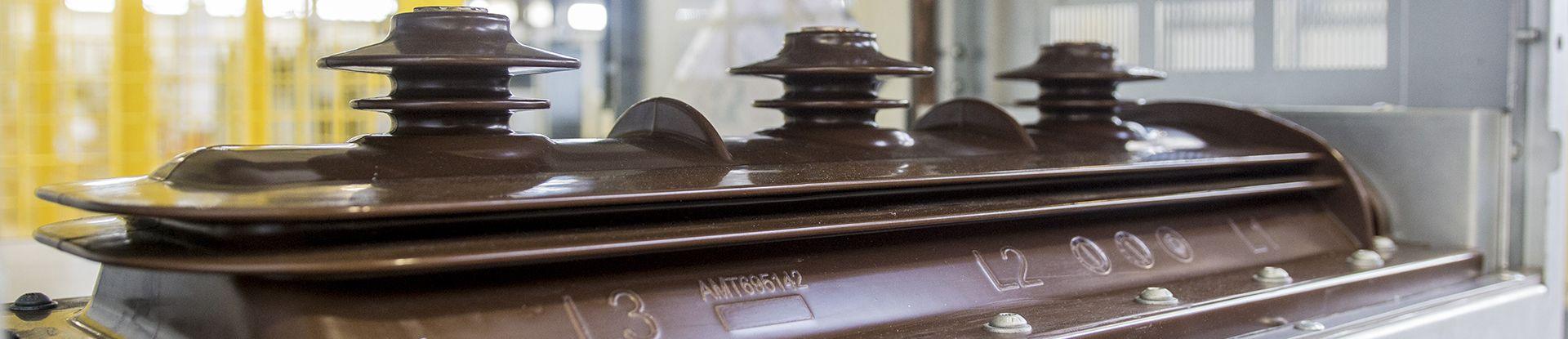
More than 15 years of experience in medium voltage sensors
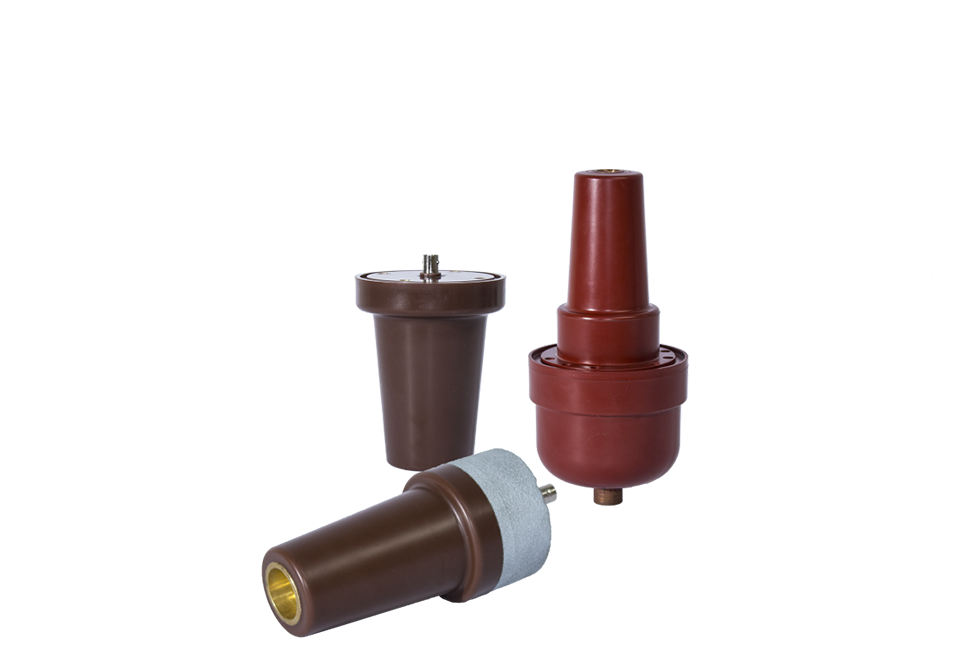
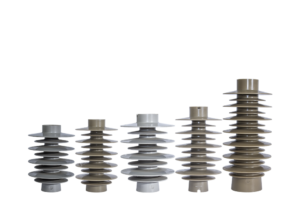
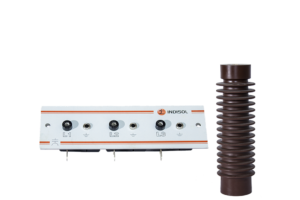
A capacitive voltage sensor takes the high voltage side capacitance of a voltage detecting system and casts it into the insulator. Two forms cover the range: TSK capacitive insulators, which support the conductor as well, and KKE capacitive coupling electrodes, which do not.
The insulator capacitance C1 works together with the downstream capacitances C2 to form a capacitive voltage divider, and that is what brings the primary voltage down to a level that can be measured safely. With connecting leads, the same insulators integrate into HR (high resistance) and LRM (low resistance) voltage detecting systems; LRM systems need additional measuring circuit capacitances (C2m) to complete the configuration.
What makes TSK units easy to specify is dimensional. In dimensions and physical properties they correspond to conventional DIN insulators without coupling capacitance, so they can be used as direct replacements. The panel does not change — the insulator that was only holding the busbar now also detects voltage on it.
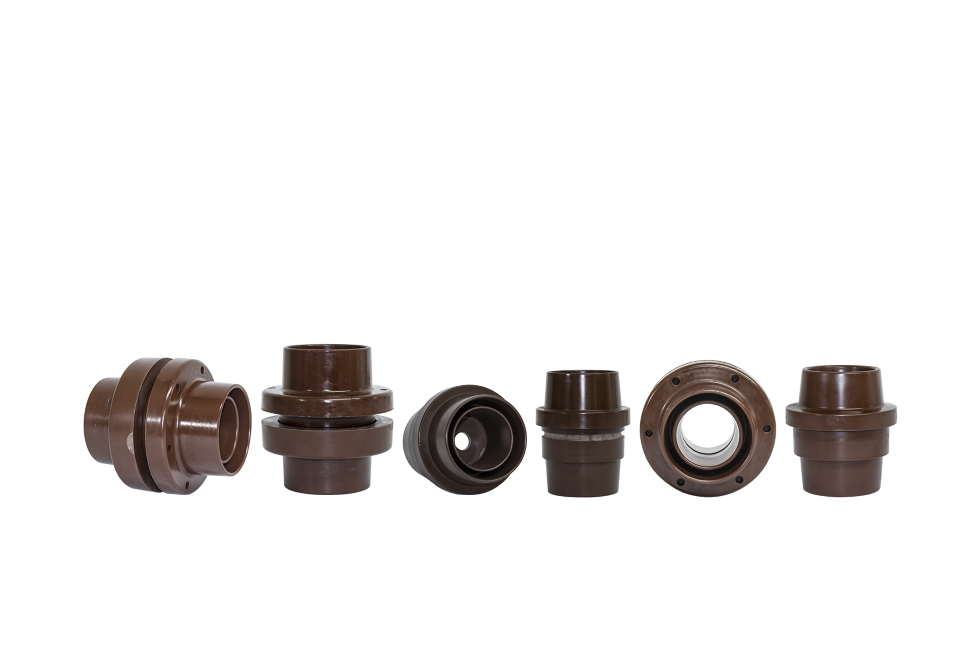
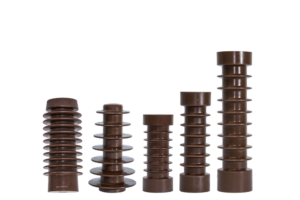
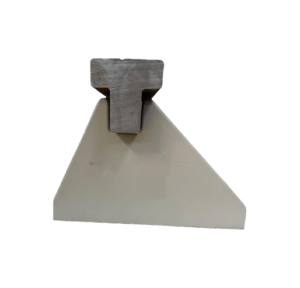
Where no mechanical support is required, KKE coupling electrodes do the same electrical job in a lighter and more compact part. They are not designed to withstand mechanical loads, and that is precisely what makes them the practical choice for a retrofit on switchgear that is already installed.
Tell us the operating voltage, whether the part also has to carry load, and the height and diameter you have available. We will tell you whether it is a TSK or a KKE.
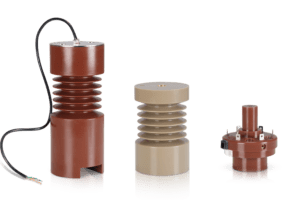
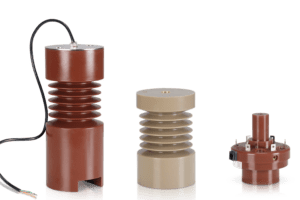
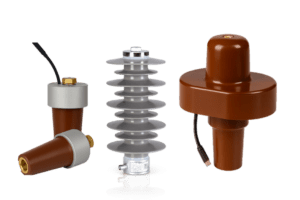
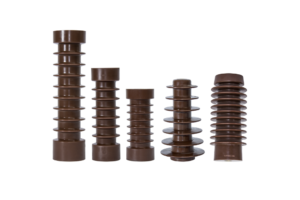
TSK capacitive insulators and KKE capacitive coupling electrodes, cast in epoxy by Indisol
TSK — capacitive insulators
Supporting insulator and coupling capacitance in one cast part.
How the divider works
A capacitive divider puts two capacitances in series between the conductor and earth. The insulator provides the upper one, C1; the measuring equipment provides the lower one, C2. The voltage across C2 is a fixed fraction of the primary voltage, and that fraction is set by the ratio of the two capacitances.
This is why the principle is so durable in medium voltage work: the ratio depends on geometry cast into a solid, not on windings, contacts or a core. Nothing in the divider wears, and nothing saturates.
For LRM (low resistance) systems, additional measuring circuit capacitances C2m complete the configuration. For HR (high resistance) systems, the insulator and its connecting leads are enough. Tell us which system you are building into and we will match the capacitance to it.
KKE — capacitive coupling electrodes
The same electrical function without the mechanical one.
Why the standardised geometry matters
A capacitive sensor is only useful if it fits. Because TSK insulators follow the dimensions of conventional DIN insulators without coupling capacitance, specifying one is a substitution rather than a redesign of the panel.
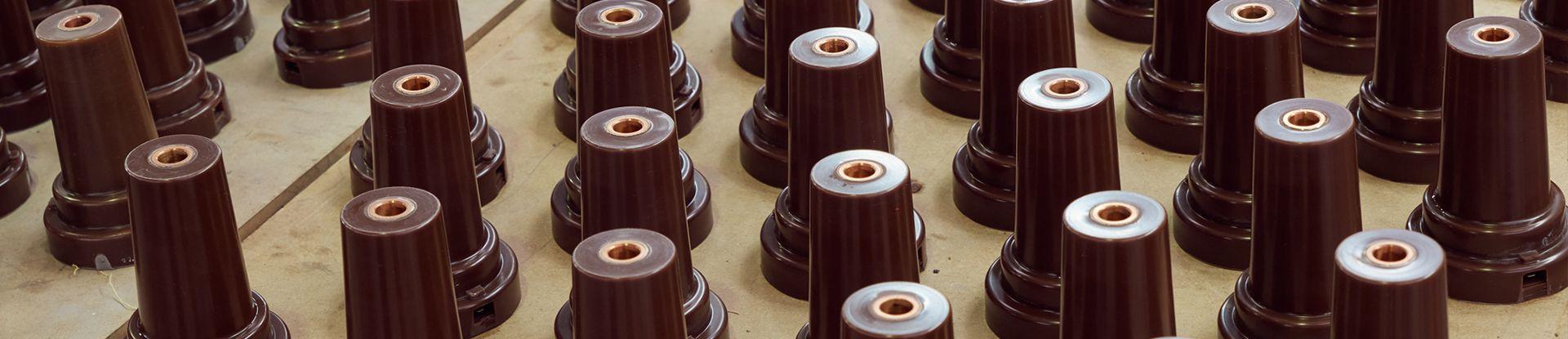
Both TSK and KKE are cast in our own factory, with metallization and sand blasting kept in house — the surfaces that decide how the part behaves electrically stay under our control rather than a subcontractor’s. More on how we cast them.
Testing runs in house and in external laboratories under ISO 9001 and ISO 14001: industrial frequency, partial discharges to 200 kV, and the mechanical set for the supporting versions.
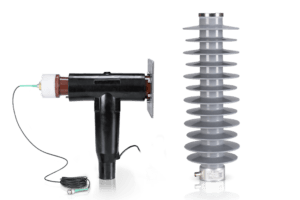
The other two sensor technologies
All three cover medium voltage. What separates them is what the signal is for.
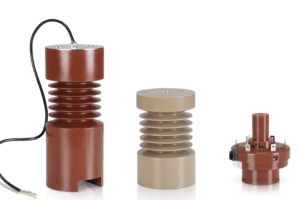
The rest of what we cast
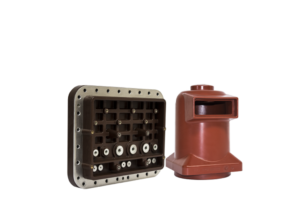
A voltage sensor is one of seven families of cast epoxy parts. Go straight to the right one.
Common questions
Send us the voltage and the space you have. We will tell you whether it is a TSK or a KKE.
Every part we cast is engineered to a specification rather than selected from a catalogue, so you get a design proposal back, not a page number. You do not need all of the detail to start.
Request a quotation → or see how we cast them