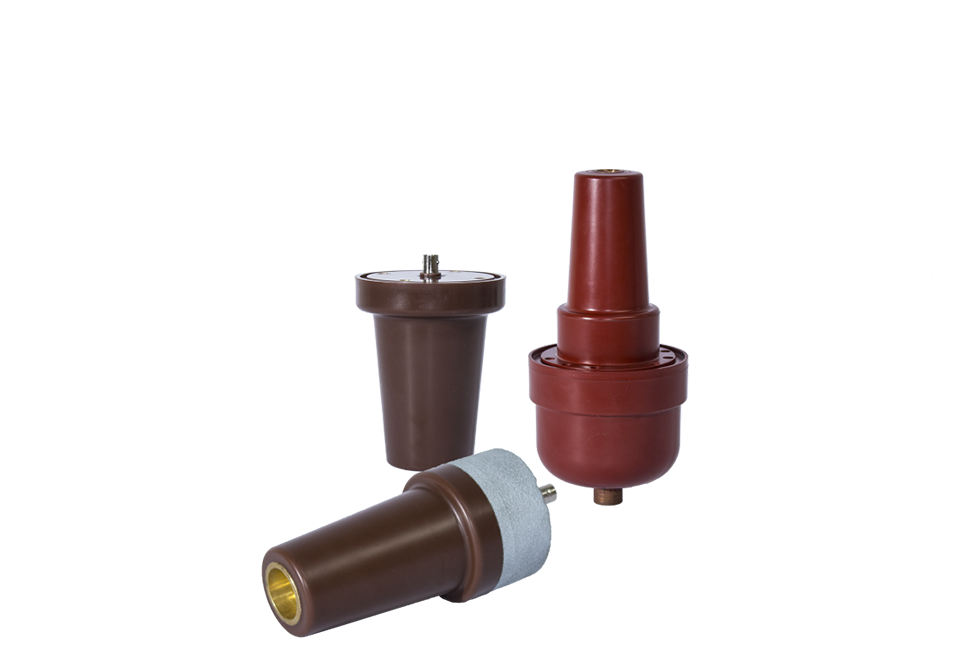
Before anyone works on a medium voltage panel, one question has to be answered without doubt: is the busbar live? A capacitive voltage divider is the accepted way to answer it. The capacitance of the insulator itself forms the high voltage arm of the divider, a measuring capacitance completes it, and what comes out is a low voltage signal that follows the conductor faithfully enough to drive an indicator, a detection system or a measurement input.
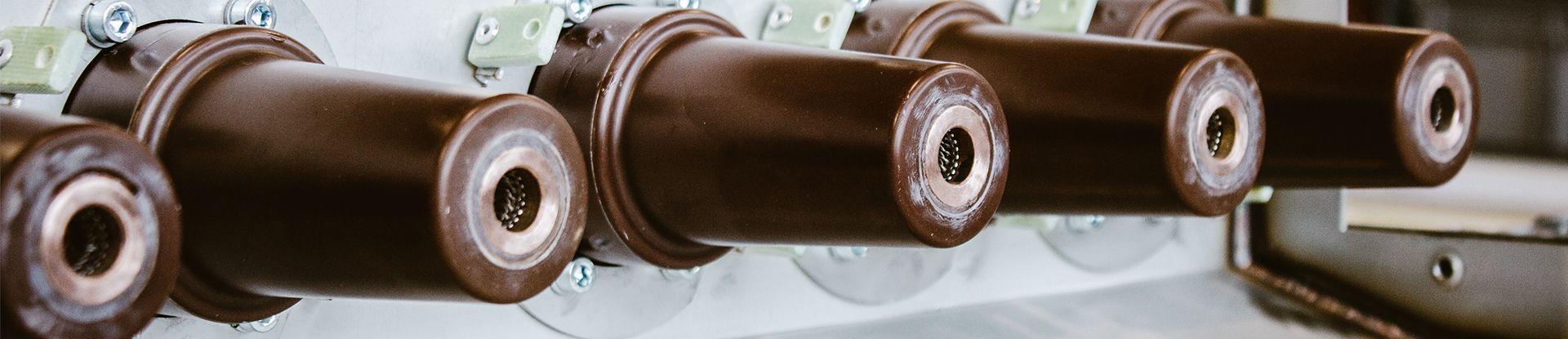
Indisol casts that divider into the insulator that is already holding the conductor, across low, medium, high and very high voltage. The part keeps its structural job — it still supports the busbar — and gains the voltage indication function without a separate device taking up room in the panel.
Capacitive supporting insulators are dimensioned to correspond to conventional DIN insulators without coupling capacitance, so they go into an existing switchgear design as a direct replacement instead of forcing a redesign.
They are used in medium voltage switchboards, in industrial installations, and wherever work under voltage has to be prepared — which is where a reliable indication of the presence of voltage stops being a convenience and becomes a safety requirement.
Looking for something else? The full divider family, the three sensor technologies and the other insulator families each have their own page — the guide below points you to the right one.


Capacitive divider insulators for voltage indication
Which epoxy insulator do you need?
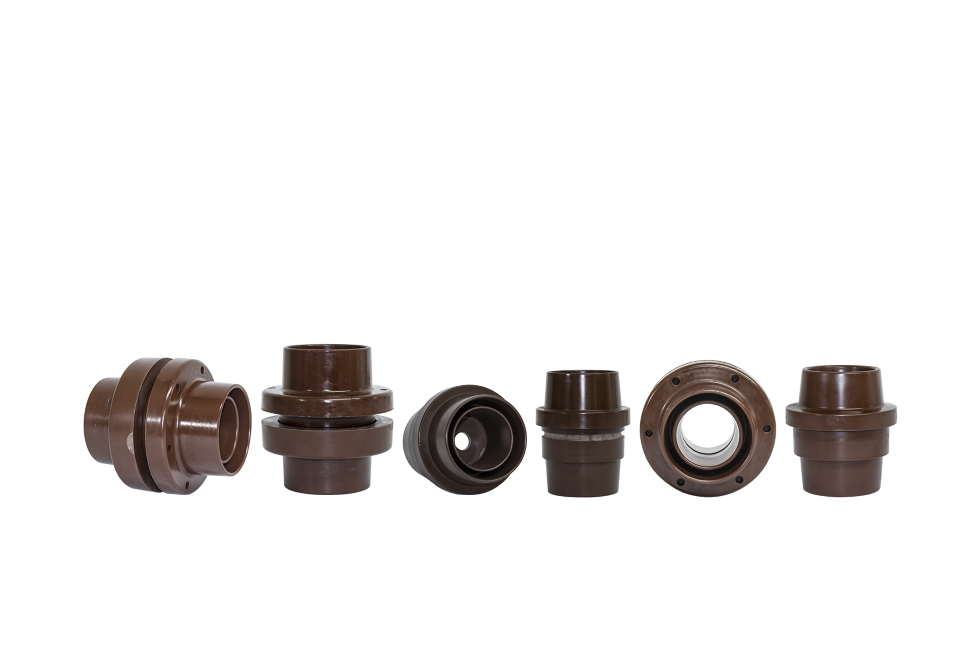
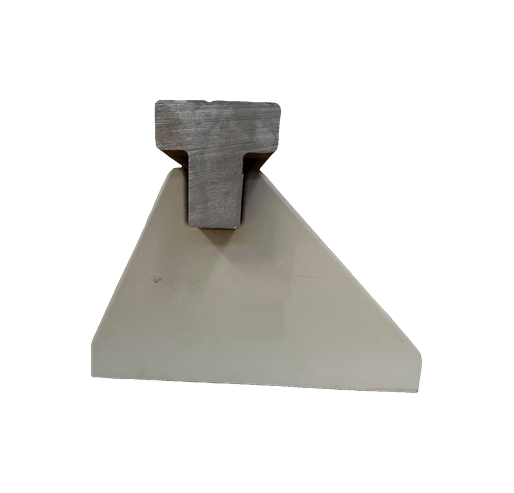
“Epoxy insulator” is a family name, not a part number. A support insulator is one member of it. If the part you are specifying does something else, go straight to the right family.
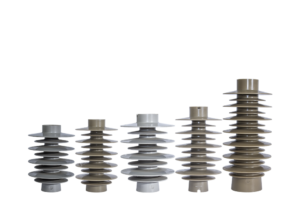
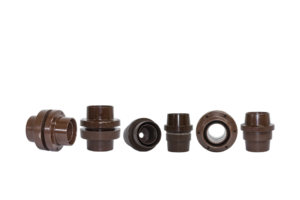
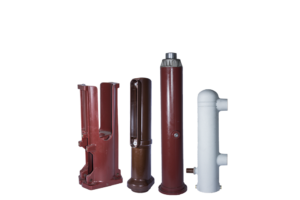
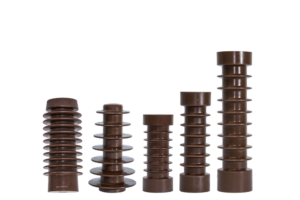
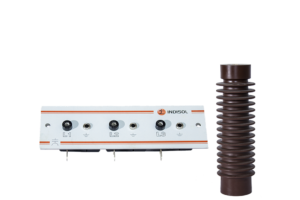
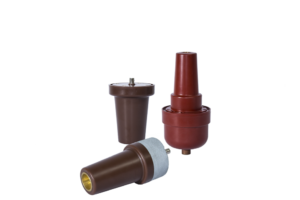
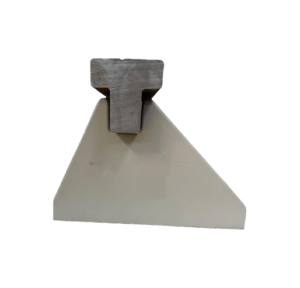
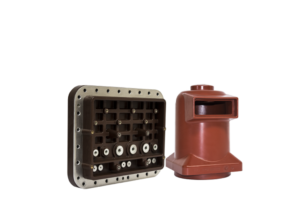
Indoors or outdoors: the resin decides
Where the insulator lives still decides the resin, exactly as with any other part we cast. Both families cover low, medium, high and very high voltage.
Where neither standard family suits the duty, resin systems can be developed to specific electrical, thermal and mechanical requirements. More on our epoxy resin technology.
How a capacitive divider insulator is made
The division ratio is set by the geometry of the casting, so here the casting is the measurement rather than something the measurement is added to.
Specified to your panel, then measured
Cast epoxy has a breakdown strength of 20 to 40 kV/mm depending on the system. That is the material figure. What a divider insulator has to deliver is the withstand voltage of your system together with a division ratio you can rely on, so the insulation and the capacitance are dimensioned together rather than one after the other.
Operating voltages of 12, 24, 36 and 72 kV. Where the signal is used for measurement and not only for indication, accuracy classes with a measured value deviation of 0.2% or 0.5% apply, with a standardised 3.25 V secondary output and a BNC or RJ45 interface.
On a divider, accuracy is measured, not claimed: our laboratory carries out high voltage and current metrology, including amplitude and phase accuracy control, alongside industrial frequency and partial discharge testing to 200 kV. Production runs under ISO 9001 and ISO 14001.
Common questions
Tell us the panel, the voltage, and what reads the signal.
Every divider insulator we cast is dimensioned to a specification rather than taken off a shelf, so the more you can tell us, the closer the first proposal will be.
Request a quotation → or see how we cast them