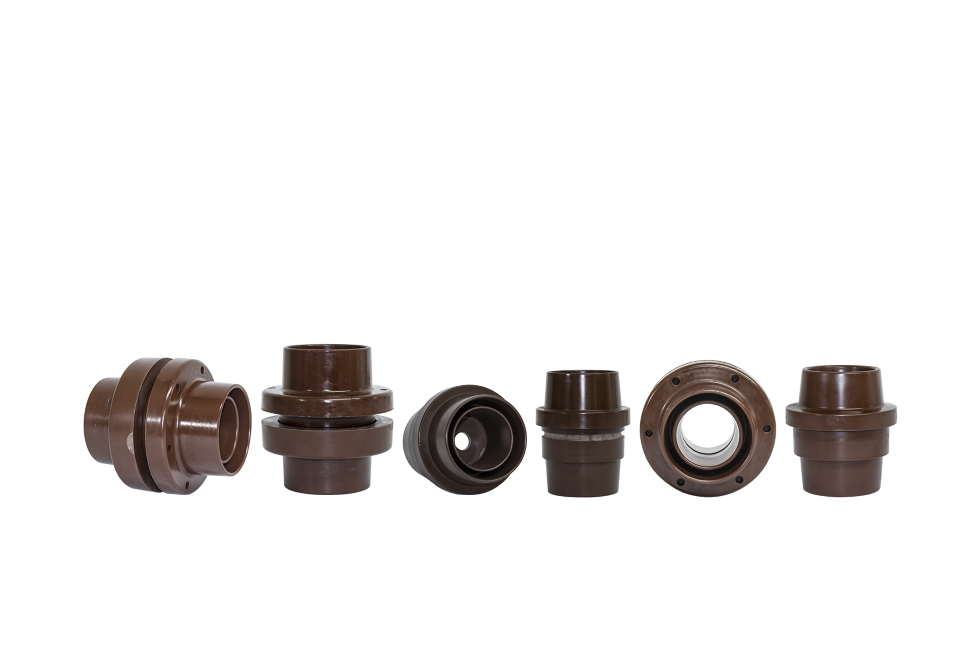
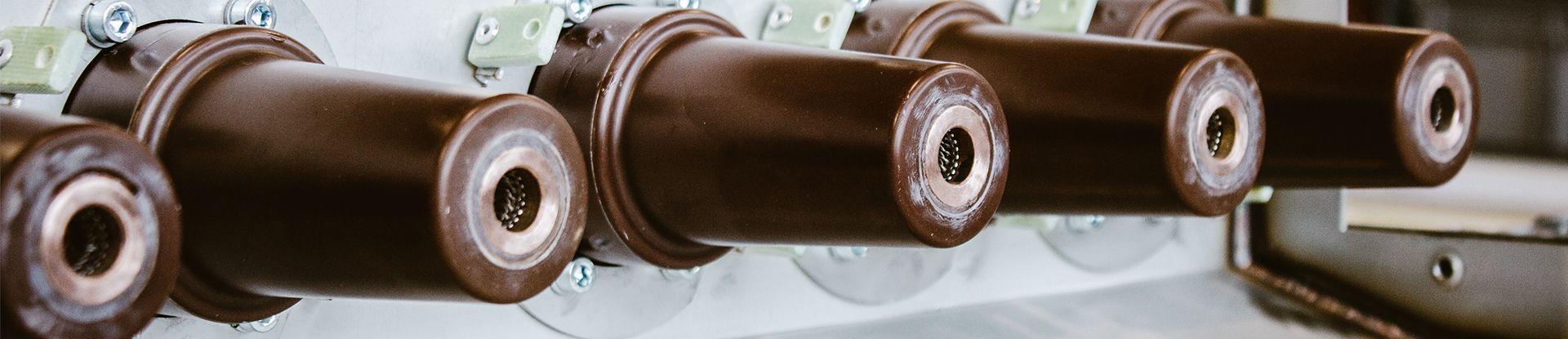
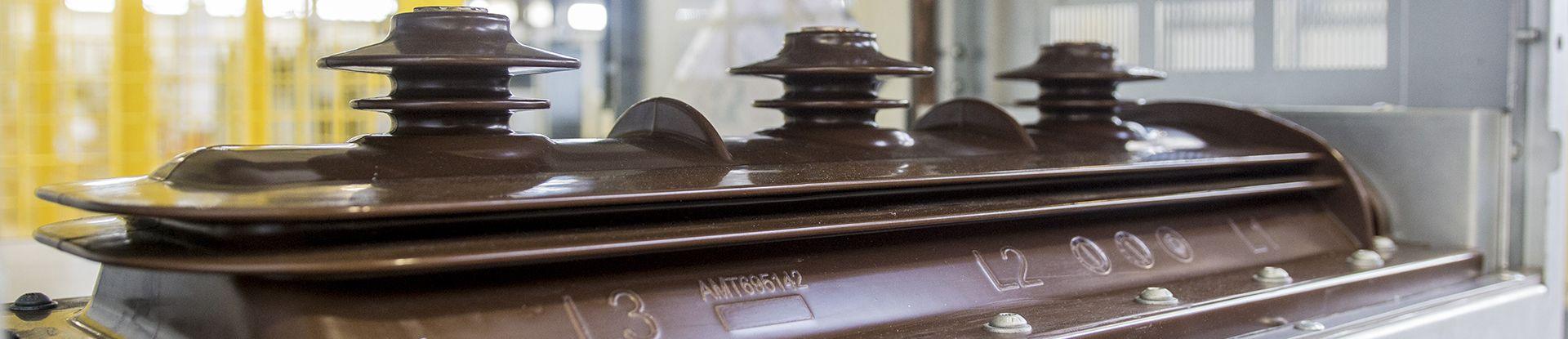
A smart grid has to be measured before it can be operated, and the parts that already hold the conductor are where that measurement can most easily live. Indisol builds sensing and monitoring into components that are doing a structural job anyway — a support, a bushing or an enclosure — so the function arrives without another device to mount, wire and find room for.
The base is the same cast epoxy everything else here is made from, across low, medium, high and very high voltage. What changes is what goes inside it: voltage and current sensing, temperature measurement, partial discharge measurement and insulation ageing monitoring, and communication over PLC so the data travels on the power network itself.
Every one of these is engineered to order. The sensing element, the accuracy class, the interface and the geometry are decided by your installation rather than by a catalogue, and the finished part is measured in our own laboratory before it ships.
Because the measurement sits inside the insulator, monitoring stops being something added to the switchgear and becomes a property of it: fewer joints, fewer interfaces, and one part to qualify instead of two.
Looking for a specific family? Support insulators, bushings, GIS parts, dividers, sensors and third rail each have their own page — the guide below points you to the right one.


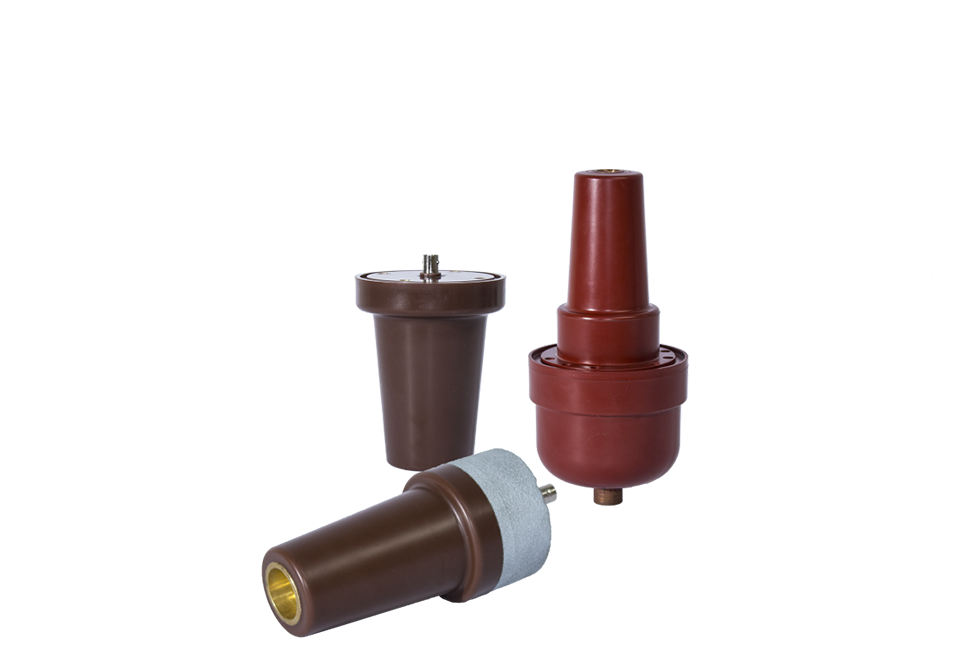
Cast epoxy parts with integrated sensing for smart grids
Which epoxy insulator do you need?
“Epoxy insulator” is a family name, not a part number. A SmartGrid part is one member of it, with the measurement built in. If the part you are specifying does something else, go straight to the right family.
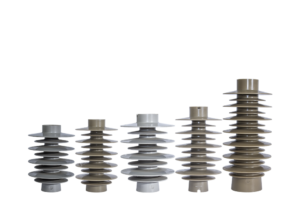
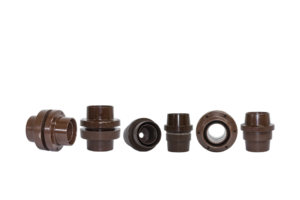
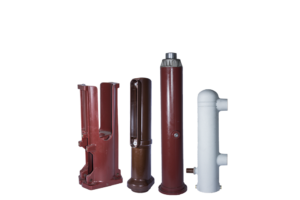
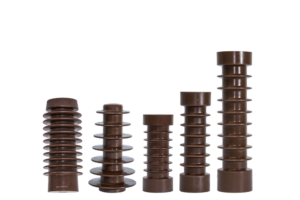
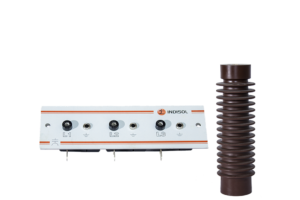
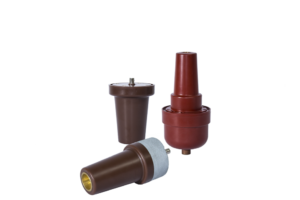
Indoors or outdoors: the resin decides
Adding a measurement does not change where the part has to survive. That is still decided by the environment, and both resin families cover low, medium, high and very high voltage.
Where neither standard family suits the duty, resin systems can be developed to specific electrical, thermal and mechanical requirements. More on our epoxy resin technology.
How a sensing insulator is made
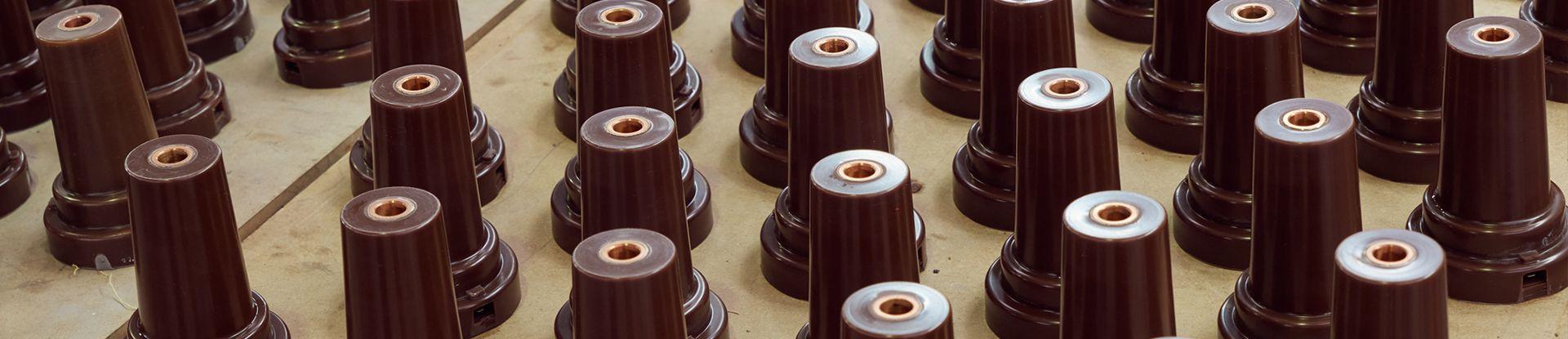
A measurement is only as good as the casting around it, so the insulation and the sensing are built in the same operation.
Specified to your network, then measured
Cast epoxy has a breakdown strength of 20 to 40 kV/mm depending on the system. That figure is the material talking. A sensing insulator has to hold both the withstand voltage of your system and the accuracy class you are going to trust, so we dimension the insulation and the divider together rather than one after the other.
Tell us what reads the signal. Accuracy classes with a measured value deviation of 0.2% or 0.5% cover most protection and monitoring duties, the secondary output is standardised at 3.25 V with a BNC or RJ45 interface, and operating voltages run 12, 24, 36 and 72 kV. Temperature, partial discharge and ageing monitoring are added where the application asks for them.
On these parts accuracy is measured, not claimed: our laboratory carries out high voltage and current metrology, including amplitude and phase accuracy control on sensors, alongside industrial frequency and partial discharge testing to 200 kV. Production runs under ISO 9001 and ISO 14001.
Common questions
Tell us what you need to measure, and where.
Every SmartGrid part we make is engineered to order, so the specification starts with your installation rather than with a catalogue number.
Request a quotation → or see how we cast them