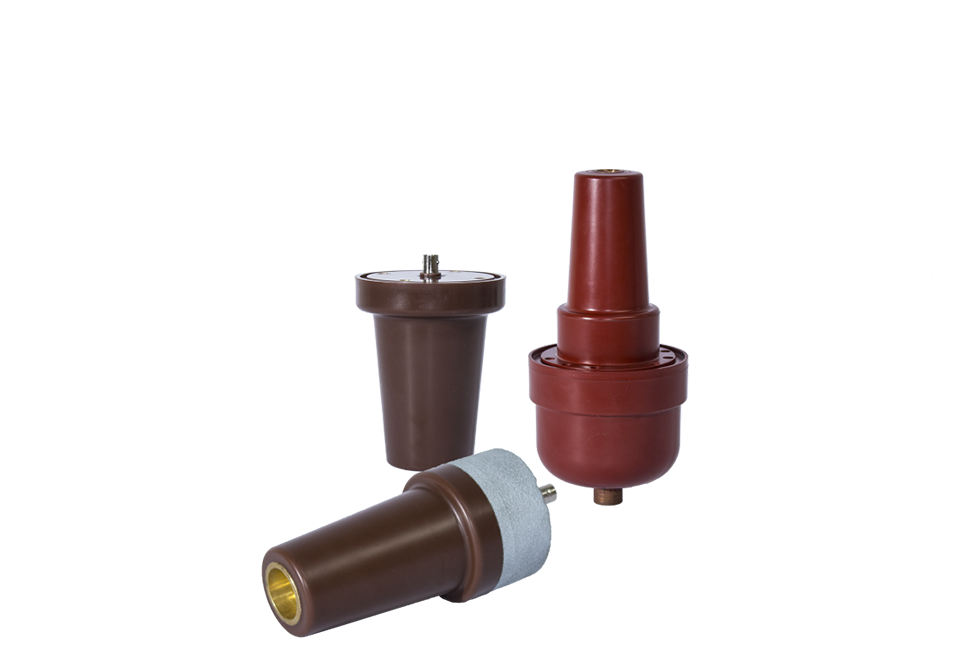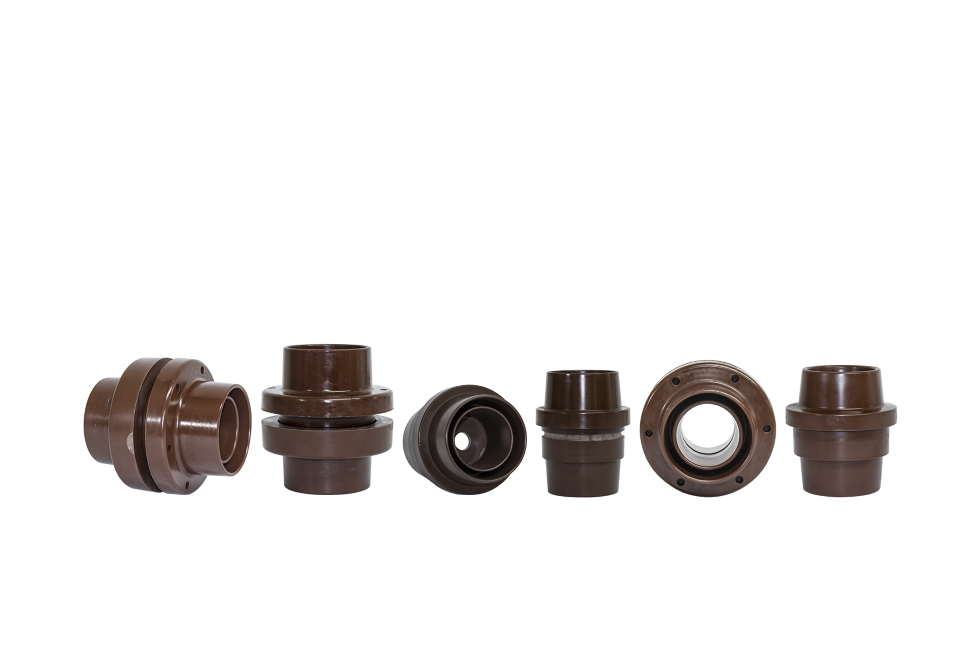


A divider insulator does two jobs in one piece. It holds a medium or high voltage conductor apart from earth, and at the same time produces a low voltage signal that is a faithful image of the voltage on that conductor.
That signal is what lets a protection relay, a monitoring system or a power quality analyser see what the network is doing without anything being connected directly to it.
Voltage division can be obtained by resistive, capacitive or combined RC circuits. The choice is not a matter of preference — it decides which frequencies the signal can reproduce, and therefore what you are able to measure.
Tell us the voltage class, the accuracy you need and what reads the signal, and we will tell you which circuit fits.
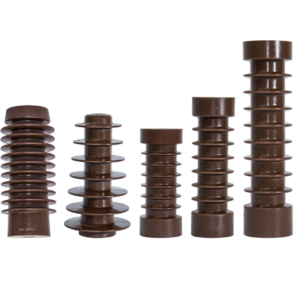
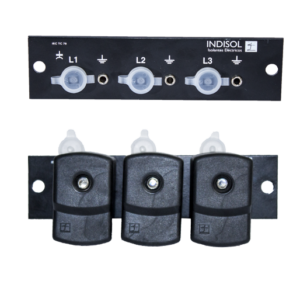
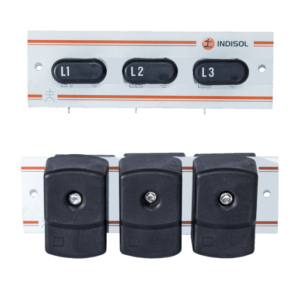
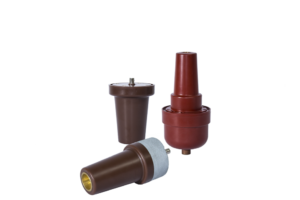
Cast epoxy divider insulators
Which circuit for which job
The three circuits are not interchangeable. What separates them is bandwidth, and bandwidth decides what the measurement can see.
It drops into your switchgear
These divider circuits are the basis of our medium voltage sensor range, and the figures published there apply to the dividers themselves: operating voltages of 12, 24, 36 and 72 kV, accuracy classes with a measured value deviation of 0.2% or 0.5% depending on the application, and a standardised 3.25 V secondary output with a BNC or RJ45 interface for clean integration with digital equipment.
Capacitive supporting insulators are dimensioned to correspond to conventional DIN insulators without coupling capacitance, so they drop into an existing switchgear design as direct replacements instead of forcing a redesign. That is usually the difference between a retrofit you can schedule and a project you have to justify.
Accuracy that is measured, not asserted
An accuracy class is only worth what the measurement behind it is worth. Our laboratory carries out high voltage and current metrology, including amplitude and phase accuracy control on sensors, alongside industrial frequency and partial discharge testing to 200 kV.
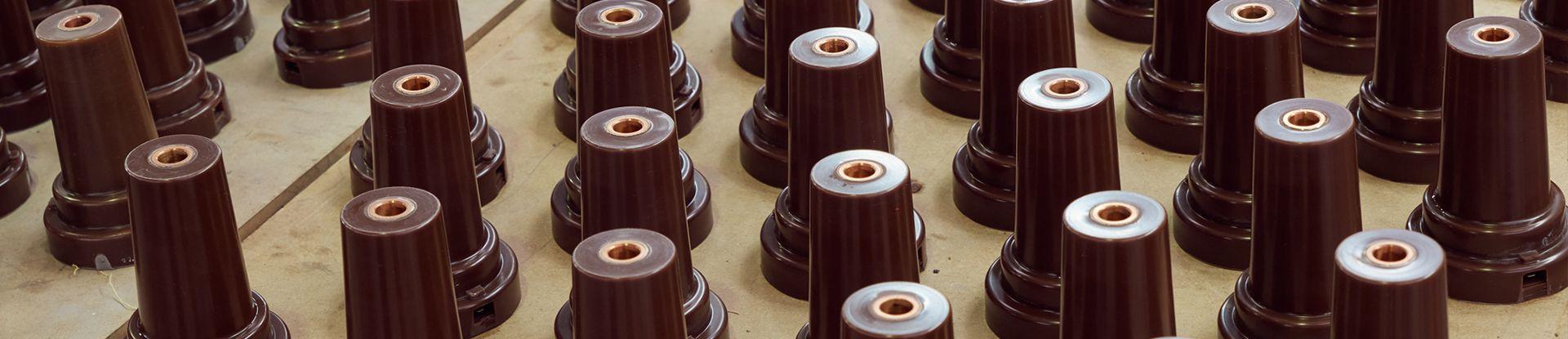
The body of the divider is cast from resin prepared under vacuum, which matters twice here: once for dielectric reliability, and once because a void inside a divider is a change in the division ratio. On an insulator a void shortens its life; on a divider it also falsifies the reading.
Which epoxy insulator do you need?
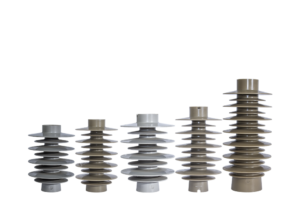
A divider insulator is one member of a family. If the part you are specifying does something else, go straight to the right family.
Common questions
Tell us the voltage class, the accuracy and what reads the signal.
Every part we cast is engineered to a specification rather than selected from a catalogue, so you get a design proposal back, not a page number. You do not need all of the detail to start.
Request a quotation → or see how we cast them