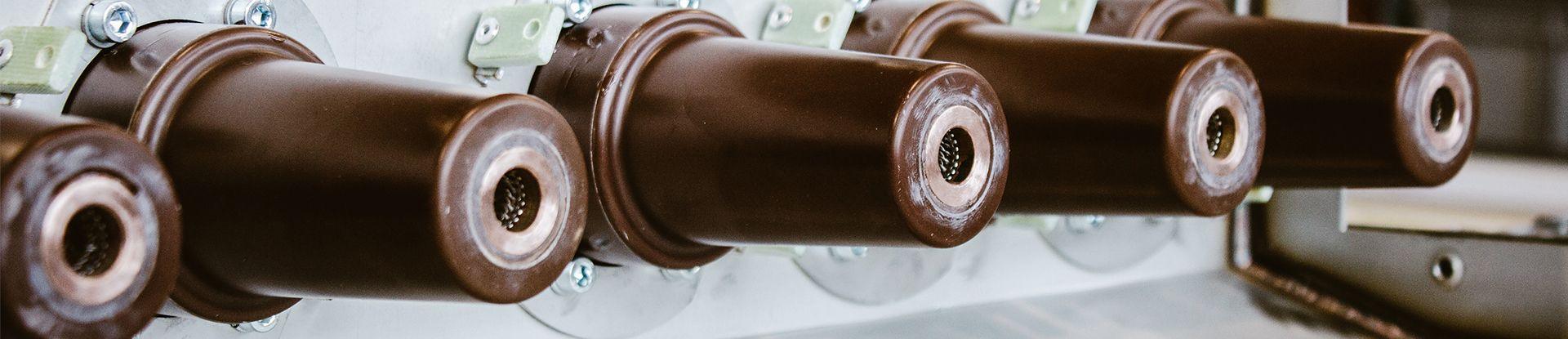

More than 15 years of experience in medium voltage sensors
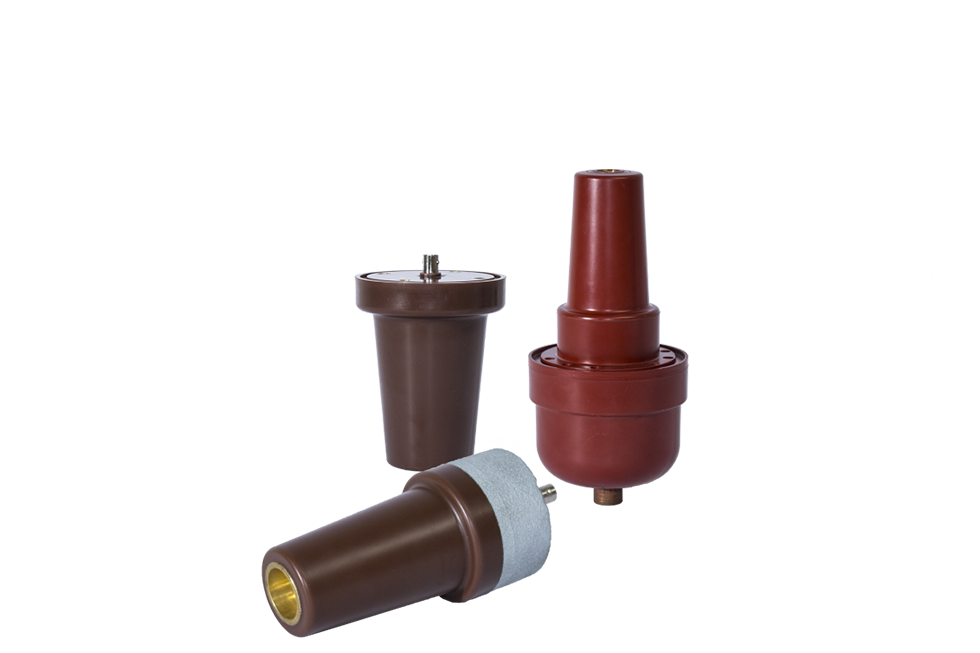
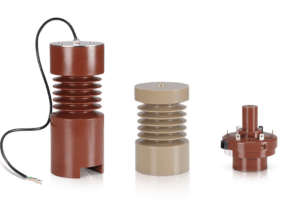
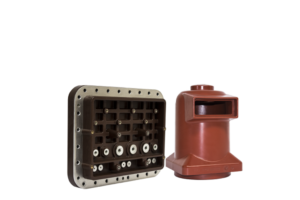
The ohmic voltage sensor is a resistive divider cast in epoxy, engineered to mount as an end piece in the plug set. It gives the most accurate and most stable image of the medium voltage in our range: measured value deviation of 0.2% or 0.5%, with a standardised 3.25 V secondary output.
A resistive divider has no core to saturate and no capacitance whose ratio moves with frequency, so what appears on the secondary is a scaled copy of what is on the conductor. That is why this is the sensor to specify when the signal feeds a protection relay, a power quality analyser or a diagnostic system rather than a simple live-or-dead indication.
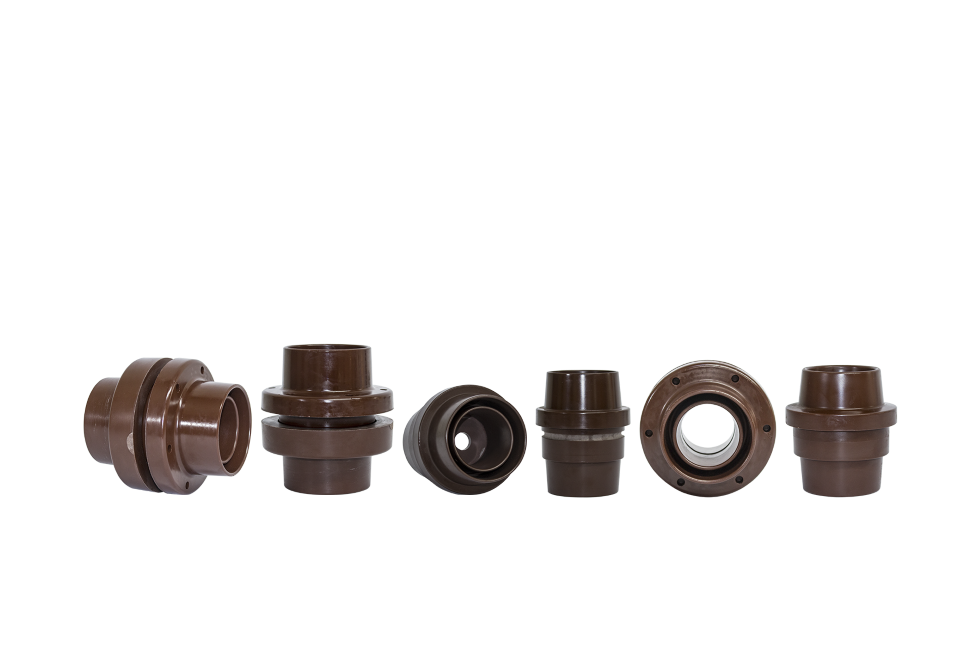
The modular design mounts as an end piece in the plug set, which makes it as straightforward in a retrofit as in a new panel — the sensor takes the place of a component that is already there instead of asking for space that is not.
Thermal stability is designed in. The divider holds its accuracy across a wide temperature range, so the deviation you specify is the deviation you get in service and not only on the test bench.
Send us the operating voltage, the deviation class and the secondary interface, and we will come back with the part that fits.
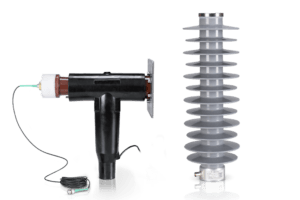
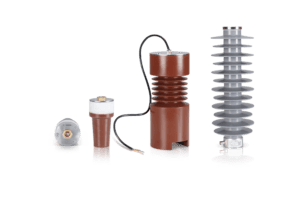

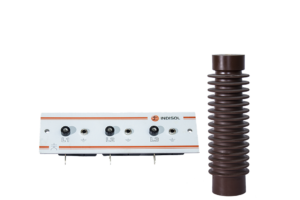
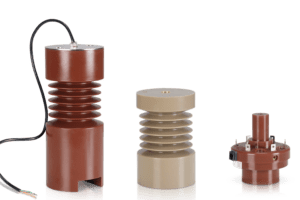
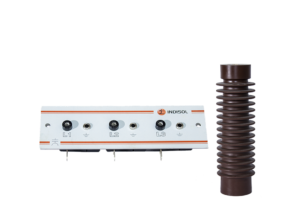
Ohmic voltage sensor as an end piece in a medium voltage plug set, cast in epoxy by Indisol
Electrical characteristics
Three numbers settle most specifications.
Where they are used
Medium voltage switchgear, where precise voltage measurement supports protection relays, control and automation. This is the tightest space in the panel and the reason a divider is used instead of a wound transformer.
Transformers, enabling continuous monitoring, diagnostics and fault detection — applications where a drifting signal is worse than no signal at all.
Secondary systems, particularly grid automation and digital substations, where stable and accurate signals are the input the whole system depends on.
Compatibility
The sensor is designed to fit what is already in the panel.
Performance and reliability
Advanced resistive divider technology gives long-term measurement stability, excellent linearity, and minimal influence from temperature variation — the three things that decide whether a measurement is still worth trusting after ten years in a panel.
The construction is robust enough for an extended service life with low maintenance, and the standardised output simplifies integration into monitoring and control systems that are already installed.
Testing runs in house and in external laboratories under ISO 9001 and ISO 14001, with industrial frequency and partial discharge capability to 200 kV. More on how we cast them.
The other two sensor technologies
All three cover medium voltage. What separates them is what the signal is for.
The rest of what we cast
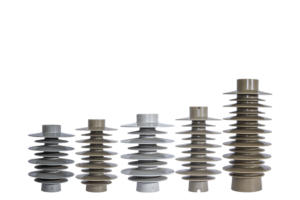
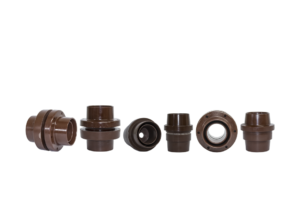
A voltage sensor is one of seven families of cast epoxy parts. Go straight to the right one.
Common questions
Send us the voltage, the deviation class and the interface. We will design the sensor to them.
Every part we cast is engineered to a specification rather than selected from a catalogue, so you get a design proposal back, not a page number. You do not need all of the detail to start.
Request a quotation → or see how we cast them