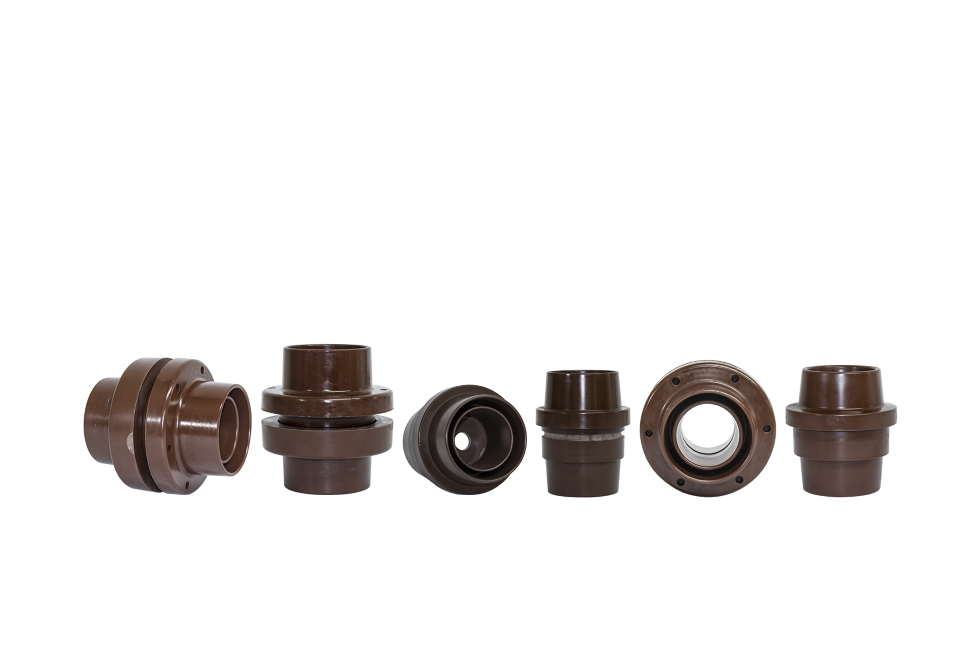
Capacitive Voltage Sensors (TSK / KKE) for Medium Voltage Switchgear
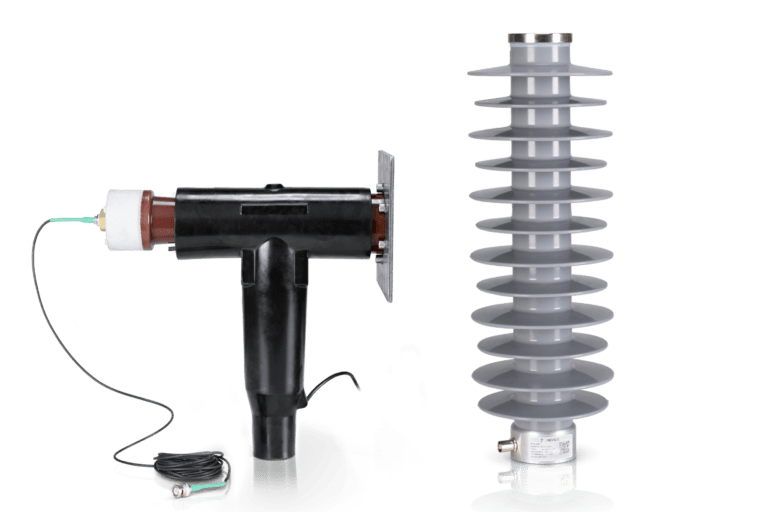
Capacitive insulators with supporting function (TSK) are designed to serve as the high-voltage side capacitance for voltage detecting systems, providing a reliable interface between the medium-voltage section and the measuring or monitoring equipment.
In terms of dimensions and physical properties, TSK capacitive insulators correspond to conventional DIN insulators without coupling capacitance, which means they can be directly used as replacements. Together with the downstream capacitances C2, the insulator capacitance C1 forms a capacitive voltage divider, enabling precise and safe voltage detection.
When combined with connecting leads, capacitive insulators can be integrated into HR (high resistance) and LRM (low resistance) voltage detecting systems. For LRM systems, additional measuring circuit capacitances (C2m) are required to complete the configuration.
TSK – Capacitive Insulators
-
For 12, 24, 36, and 45 kV medium-voltage networks
-
Suitable for indoor applications, particularly in:
-
Design options:
-
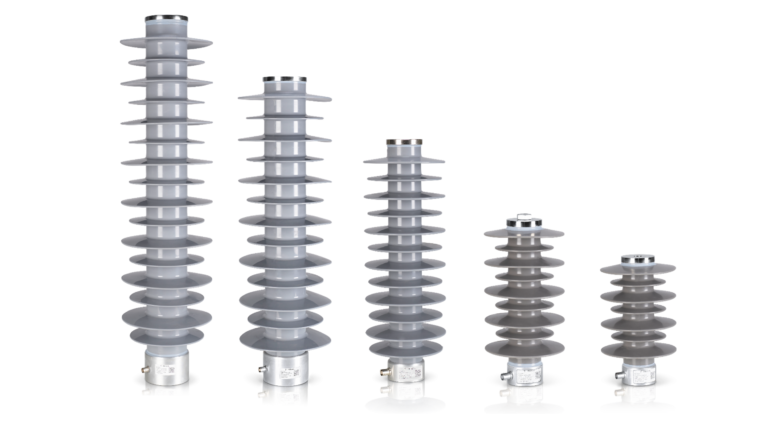
Cylindrical with ribs, for indoor use
-
Heights between 130 – 410 mm
-
Diameters of 80 mm (TSKA) or 100 mm (TSKB)
Capacitive Coupling Electrodes (KKE)
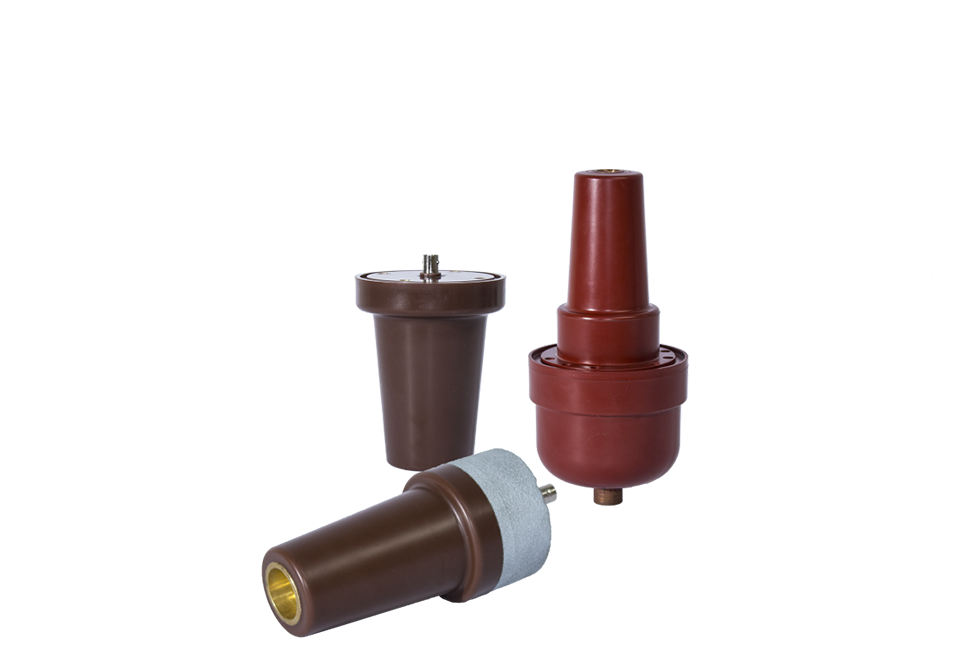
As an alternative to supporting insulators, KKE capacitive coupling electrodes are available for applications where no mechanical support is required. These devices are ideal for retrofits on existing switchgear. Unlike TSK insulators, KKE units are not designed to withstand mechanical loads, making them lighter and more compact.
Summary
With their reliable performance and standardized geometry, INDISOL’s capacitive voltage sensors (TSK and KKE) ensure compatibility with established switchgear systems while offering accurate capacitive voltage detection for medium-voltage networks. Whether used as supporting insulators (TSK) or compact coupling electrodes (KKE), these components provide engineers with robust, adaptable and maintenance-friendly solutions for modern grid applications.