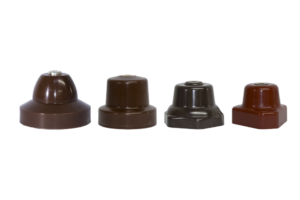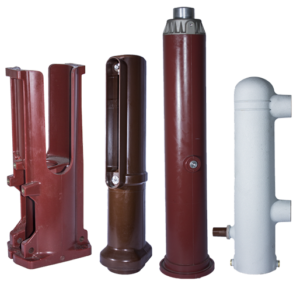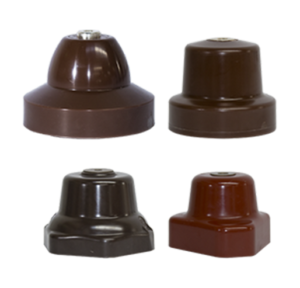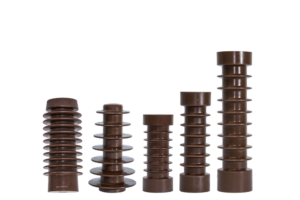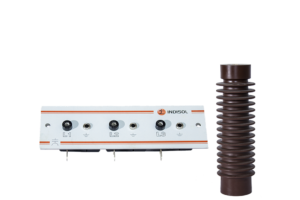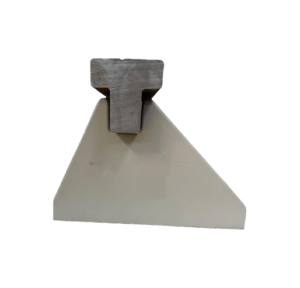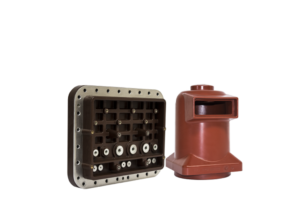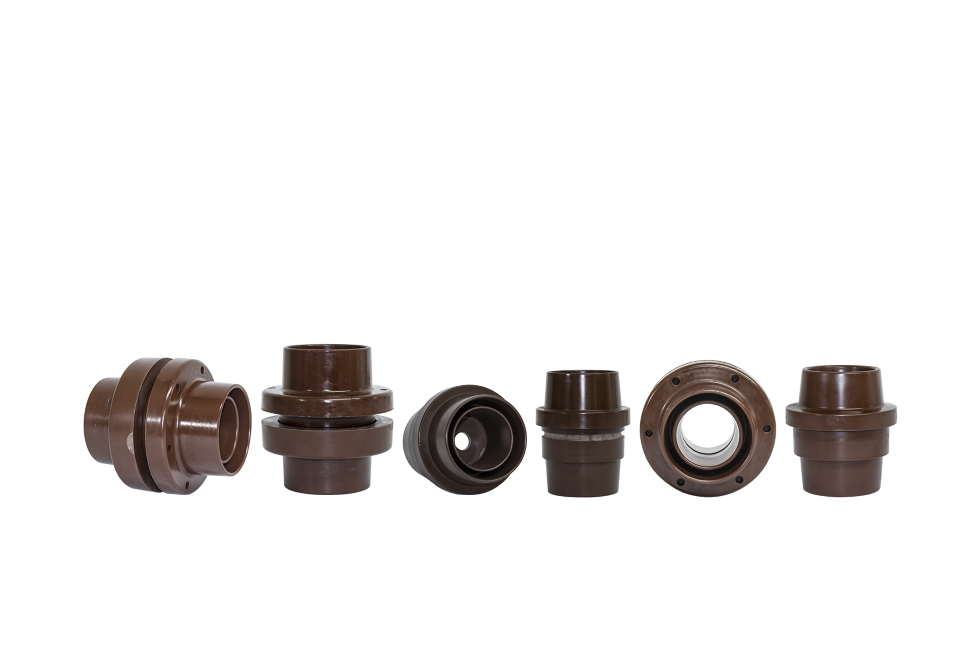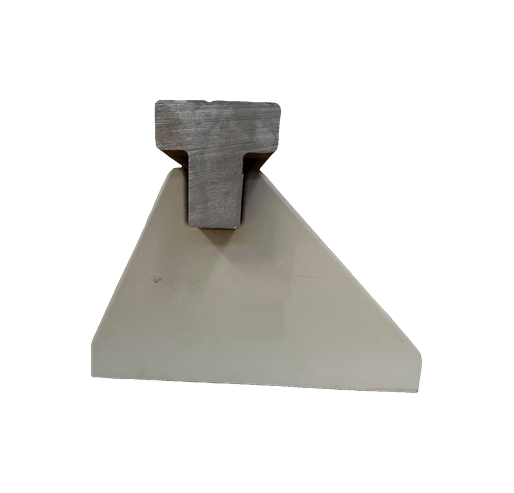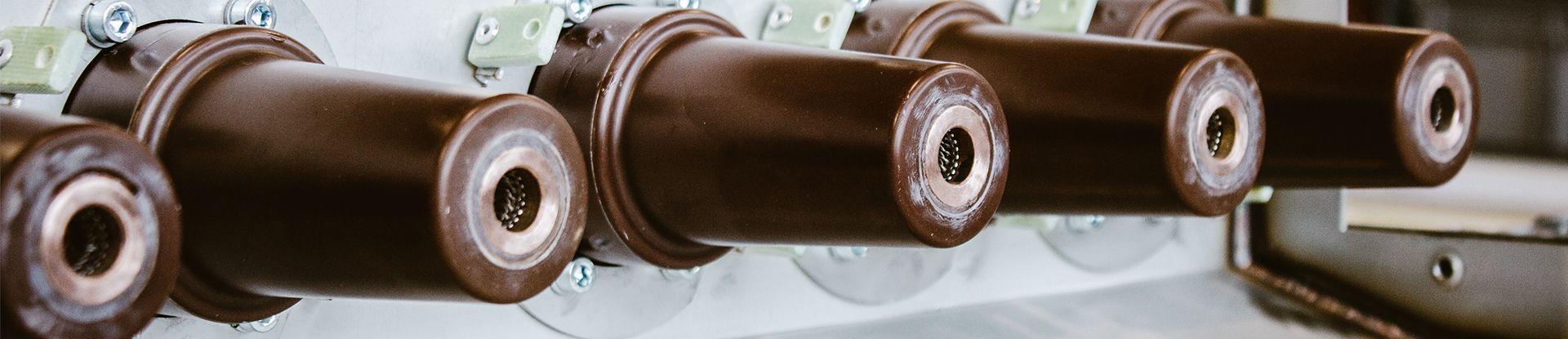
Cast epoxy insulators manufactured by Indisol

Epoxy Products

Epoxy Medium Voltage Bushings

An epoxy bushing carries a live conductor through a wall, an enclosure or a tank while keeping it insulated from the metal around it. It is the point where the insulation has to work hardest, because conductor and earthed metal are closest.

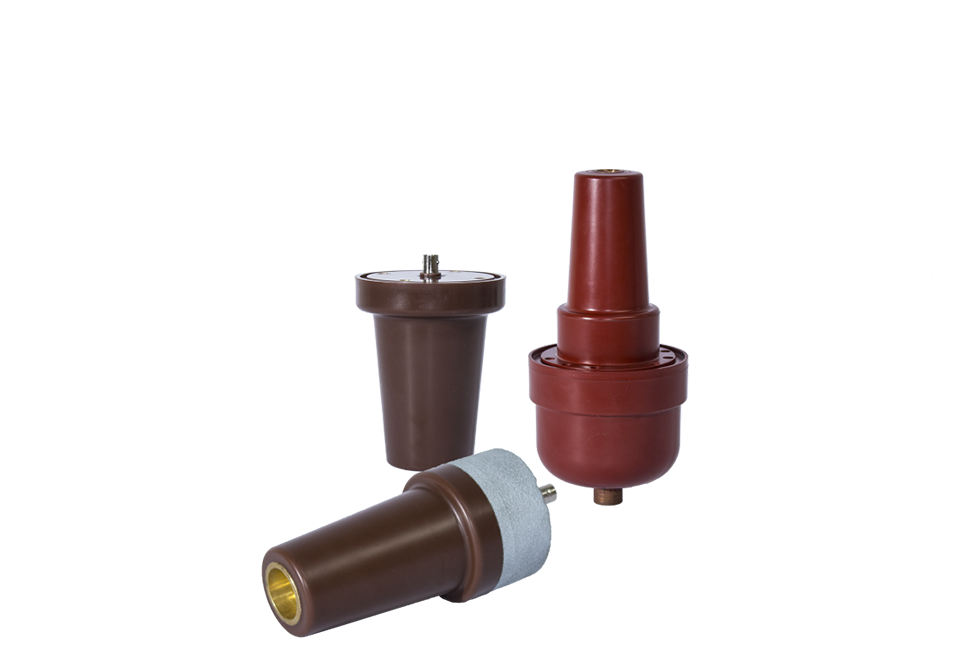
Indisol casts medium voltage bushings in epoxy resin for switchgear, gas insulated and air insulated equipment, transformers and capacitors, dimensioned to your equipment rather than chosen from a catalogue.

That includes GIS bushings for circuit breakers and fuse housings, cable and transformer bushings, extensibility bushings and special SF6 designs. Where the interface has to match equipment you already have, the geometry follows it.

For gas insulated applications every single piece is tested, not a sample: industrial frequency, partial discharges and X-ray examination of the casting.
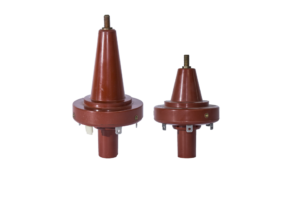
Cable bushing in cast epoxy, Indisol
Transformer bushing in cast epoxy, Indisol
Special SF6 bushing in cast epoxy, Indisol
Extensibility bushing in cast epoxy, Indisol
Bushing for gas insulated switchgear in cast epoxy, Indisol
Bushing and fuse housing for gas insulated equipment, Indisol

Cast epoxy bushings: cable, transformer, SF6, extensibility and gas insulated switchgear

100%Pieces tested for gas insulated work
X-rayExamination of the casting
Gas-tightnessLeakage testing on gas designs
200 kVIn-house test ceiling

Where the bushing sits

The duty changes with the equipment, and so does the design. These are the three families of application.

SwitchgearThrough the earthed enclosureHigh voltage lines pass through metal enclosures that sit at earth potential. The bushing is what keeps the two apart, and it does so in the tightest space in the panel.
TransformersThrough the tank wallTransformer bushings let energised conductors pass safely through the earthed transformer tank, with the conductor either built into the bushing or drawn through it.
GIS, AIS and capacitorsInside the gas envelopeBushings for circuit breakers, fuse housings and gas insulated switchgear, where compact spacing raises the electrical stress and every piece is tested rather than sampled.

The most exposed point in the switchgear

Primary disconnect bushings are the connection points that energise the network on the outgoing side of the switchgear, which means they are under voltage continuously rather than only when the equipment operates.

That makes them the most likely place for a breakdown between the conductor and the surrounding earthed metal. It is also why the creepage profile, the clearances and the absence of voids in the casting are not details on this part — they are the design.

Transformer bushings: two ways to carry the conductor

Which one you need depends on how the transformer is built and how it will be maintained.

Bar typeConductor built inThe conductor is part of the bushing. Simpler, fewer interfaces, and the whole assembly is replaced as one piece.
Draw-lead or draw-rodConductor installed throughA separate conductor is drawn through the bushing during installation, which suits tanks where the winding lead has to be connected inside.
Cable and extensibilityConnecting outwardsCable bushings and extensibility bushings for connecting to the network and for extending existing installations, cast to the interface you already have.

Tested piece by piece, not batch by batch

Development of a bushing is backed by a full test regime: serial electric tests, X-ray testing, gas-leakage testing and customer-specific inspections. Testing runs in house and in external laboratories, under ISO 9001 and ISO 14001.

For SF6 and other gas insulated equipment the rule is 100%: industrial frequency, partial discharges and X-ray examination on every piece. In house we test to 200 kV for industrial frequency and partial discharges. If the bushing has to hold gas, tell us which gas and at what pressure and the resin system and geometry are chosen for it.

Which epoxy insulator do you need?

A bushing is one member of a family. If the part you are specifying does something else, go straight to the right family.
Common questions

Can you match an interface we already have?Yes, and it is the normal case. Cast resin lets the geometry follow your flange, fixing centres and envelope instead of the other way round.
Bar type or draw-lead?It follows how the transformer is built and maintained. Bar type carries the conductor itself; draw-lead lets a separate conductor be pulled through on installation.
Do you test gas tightness?Yes. Gas-leakage testing is part of the regime for gas designs, alongside serial electric tests and X-ray examination.
What voltages do you cover?Medium voltage bushings are the core of this page, and our in-house test capability reaches 200 kV for industrial frequency and partial discharges. For other classes, tell us the system voltage.
Is every bushing X-rayed?For gas insulated applications, yes — every piece, not a sample. For other applications the test plan is agreed with you and can include customer-specific inspections.
Can you cast the housing too?Yes. Epoxy housings for medium voltage switchgear are cast here, and shapes outside the standard families go through custom HV/MV products.

Send us the wall, the tank or the panel. We design the bushing to it.

Every part we cast is engineered to a specification rather than selected from a catalogue, so you get a design proposal back, not a page number. You do not need all of the detail to start.

Request a quotation →  or see how we cast them
Useful to includeThe system voltage, and whether the bushing works in air, in oil or in gasIf it holds gas: which gas and at what pressureFlange, fixing centres and envelope, or a drawing if you have oneFor transformers: bar type or draw-lead, and the current to carryQuantity, and whether this is a prototype or a series

Our Products

CENTRO 2030, PORTUGAL 2030 e Cofinanciado pela União Europeia